
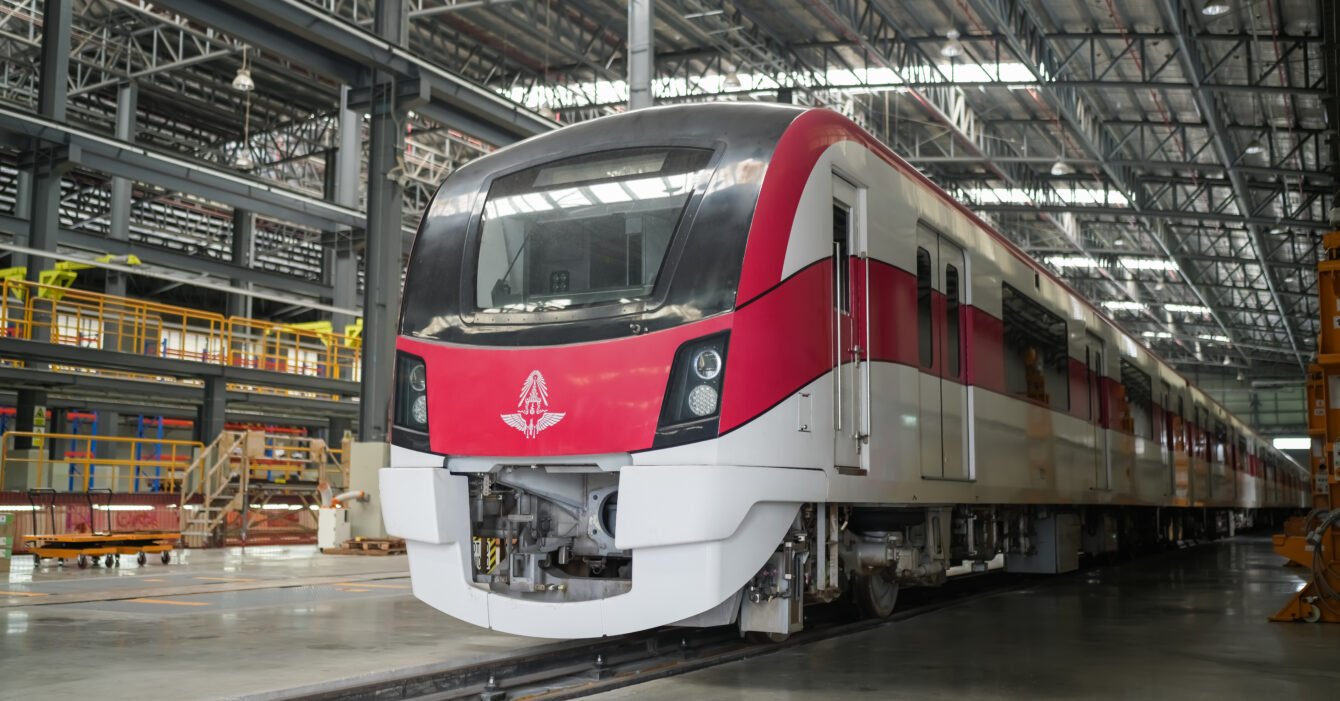
The Thai-Chinese high speed rail phase 2 is entering a decisive stage. Bidding for the 308-kilometer Korat–Nong Khai stretch was finalized in late 2025. This section extends the line from Bangkok through Nakhon Ratchasima toward Nong Khai, where it links to Laos and then to China’s rail network.
As bidding finalizes, Isan is poised for transformation—with logistics growth at 6.5% CAGR and 43% FDI surge—turning the Northeast into China’s gateway.
Phase 2 carries an estimated construction cost of 141 billion baht. It builds on Phase 1, the Bangkok–Nakhon Ratchasima segment. Once completed, the full corridor will reduce travel time between Bangkok and Nong Khai from around 10 hours to under 4 hours. Daily passenger capacity is expected to exceed 50,000 people. This means faster movement not only for travelers, but also for goods. Imagine freight times halved across borders.
The project uses Chinese CRH380 technology, designed for speeds of up to 250 km/h. This improves compatibility with the Laos–China railway. Cross-border operations become smoother. Freight trains on this line will run at up to 160 km/h. That speed is significant for logistics efficiency, especially for time-sensitive cargo.
Construction began preparatory works in the first quarter of 2026. Revenue service is targeted for 2029. The design includes 16 stations and an impressive 87% of the line built on viaducts. Elevated tracks reduce land acquisition issues. They also improve long-term operational reliability.
Isan Emerges as a Logistics Hotspot
The Thai-Chinese high speed rail phase 2 is more than infrastructure. It is a strategic economic shift. The Northeast region, also known as Isan, is preparing to become a major logistics hub.
Thailand’s freight and logistics market is valued at USD 56.56 billion in 2026. It is projected to reach USD 75.47 billion by 2031, growing at a 5.95% CAGR. Freight transport already holds a 61% market share within this ecosystem. With the rail link to Laos and China, Northeast provinces will serve as cross-border gateways.
Isan’s logistics sector alone is projected to grow at 6.5% CAGR through 2030. The new rail bridges and improved connectivity are expected to cut Hanoi–Bangkok transit time by about two hours. Faster transit means lower inventory costs. It also means better supply chain predictability.
Foreign investment reflects this momentum. Logistics-related FDI in Thailand climbed 43% in 2025. Isan is benefiting from Mekong subregion integration and spillovers from the Eastern Economic Corridor (EEC). Investors see opportunity in warehousing, distribution centers, and cross-border freight services.
The Thai-Chinese high speed rail phase 2 therefore acts as a physical and economic bridge. It connects Bangkok to Nong Khai. It connects Thailand to Laos. And through Laos, it connects directly to China’s vast rail system.
For Thailand, this corridor strengthens regional trade flows. For Isan, it reshapes its role in the national economy. Once seen mainly as an agricultural heartland, the Northeast is now positioned as a logistics engine. Elevated tracks, high-speed technology, and cross-border integration combine to support this shift.
By 2029, when revenue service begins, the transformation may be clear. Faster trains. Shorter freight cycles. Stronger trade links. The Korat–Nong Khai link is not just another rail project. It is a strategic move that ties Thailand’s future growth to regional connectivity across mainland Southeast Asia and into China.
Read more: Electric Motorcycle Taxi in Bangkok Caught in a Swap Fight